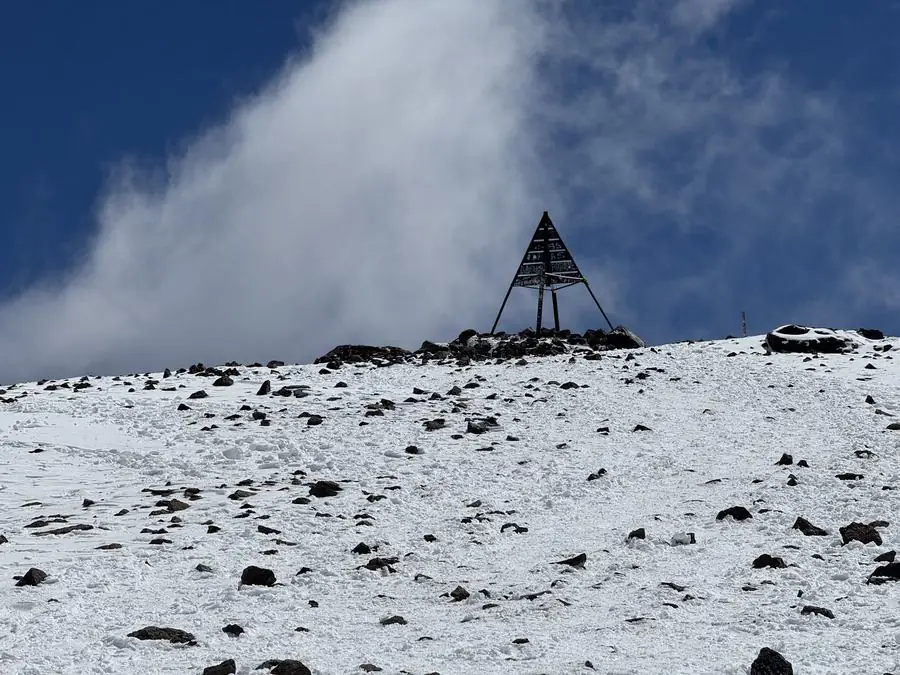
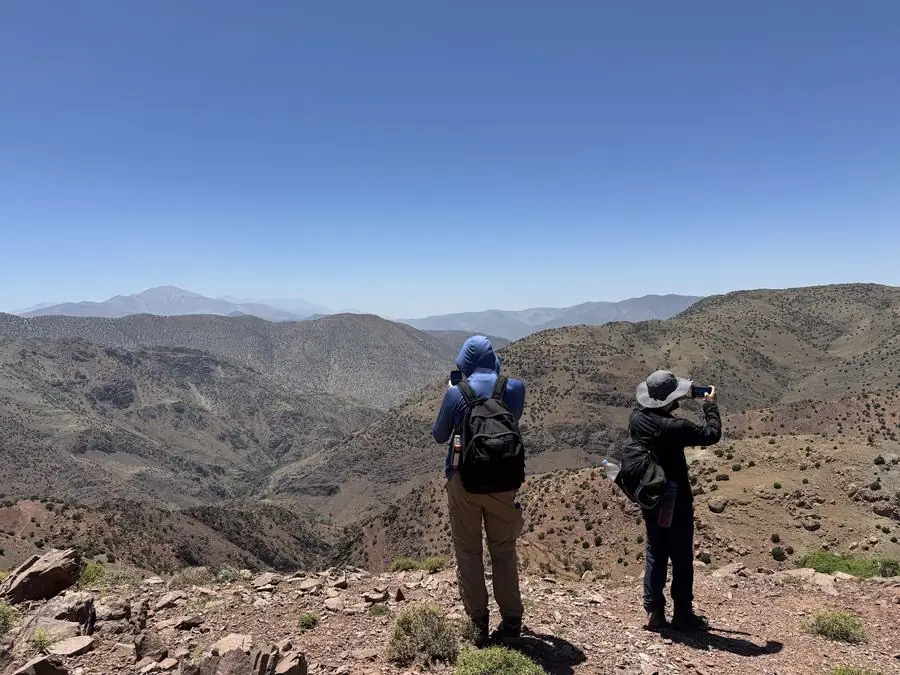
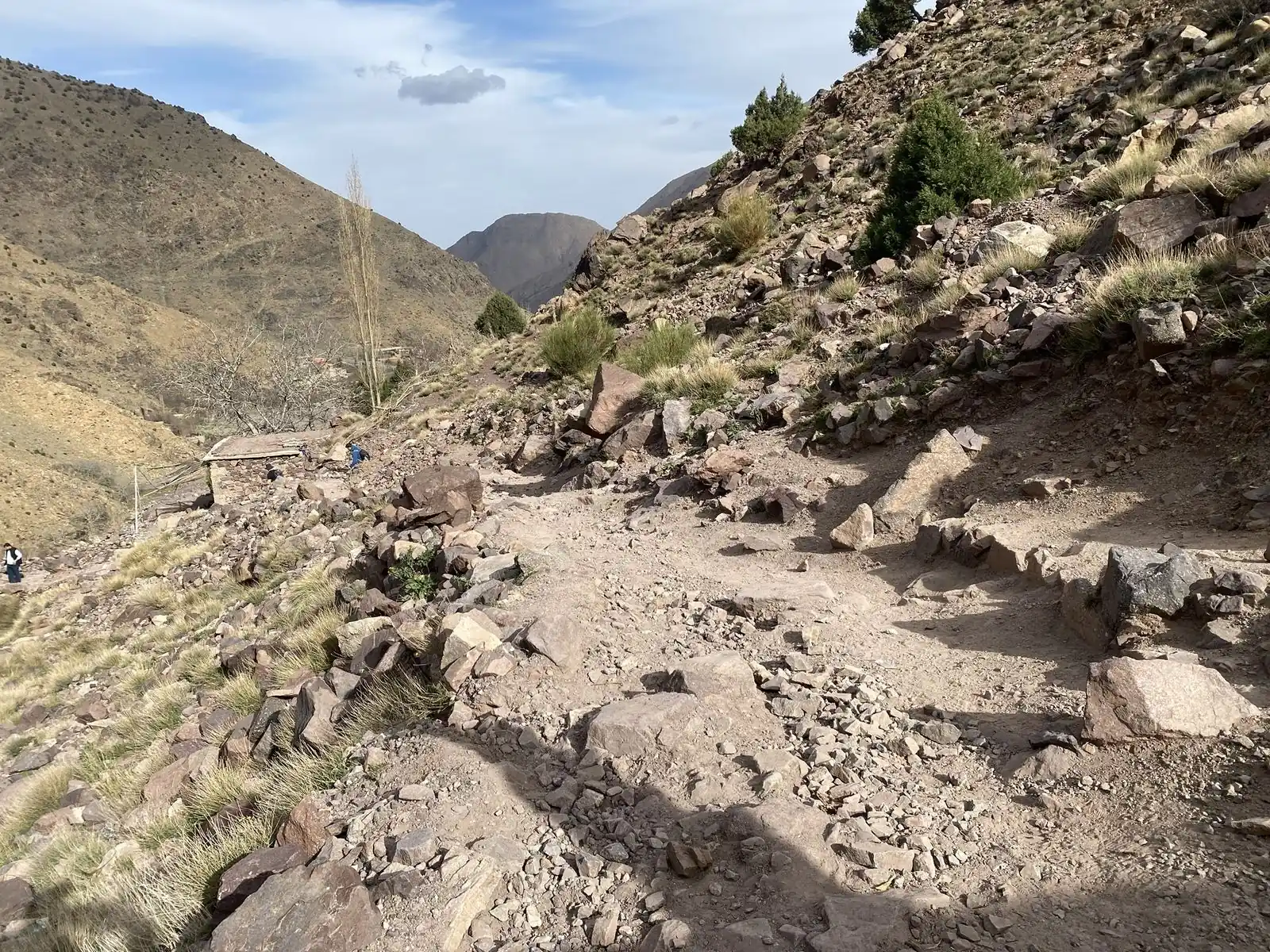
Toubkal is North Africa's highest mountain at 4,167 metres. In summer it is not a technical climb, but summit day is long: most climbers start from the refuge before sunrise and spend 7 to 10 hours going up and down, then often continue to Imlil. You don't need to be an athlete, but the fitter your legs and lungs, the more you will enjoy it. This is the plan our guides give to guests who ask how to prepare.
- Summit: 4,167 m
- Climb on summit day: about 950 m up from the refuge, and all of it down again
- Training time: 8 weeks for most active people
- Most important: long days on your feet and going down hills
Before you start
This plan suits healthy adults who already walk regularly. If you have a heart or lung condition, joint problems or have not exercised for a long time, talk to your doctor first. If you have more than 8 weeks, spread the plan out; if you have less, start at the stage that matches your fitness and don't skip the rest days.
Train in the boots you will wear on Toubkal, so they are broken in before you arrive.
Weeks 1–2: build the base
- Walk briskly 3 times a week for 45 to 60 minutes.
- Do one longer walk at the weekend of 2 to 3 hours, on hills if possible.
- Add two short strength sessions of 20 minutes: squats, lunges, step-ups and calf raises.
Weeks 3–4: add hills and a pack
- Carry a daypack of 5 to 6 kg on your walks: water, a jacket and lunch, like on the mountain.
- Twice a week, spend 20 to 30 minutes on stairs, a steep hill or a step machine.
- Make the weekend walk 3 to 4 hours with real climbing.
Weeks 5–6: get used to long days
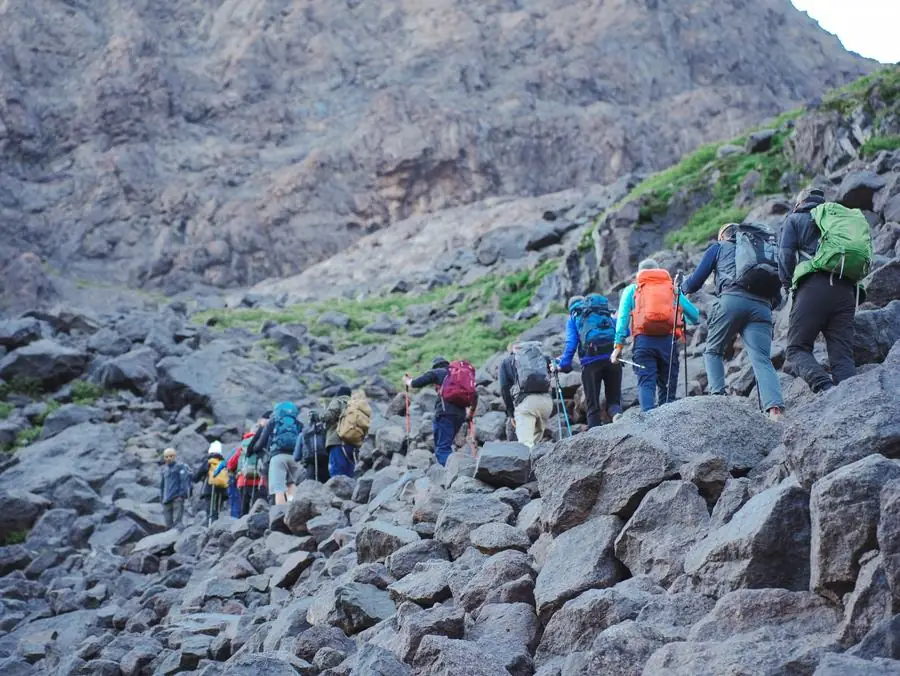
- Do one hike of 5 to 6 hours, ideally with 800 m or more of ascent.
- Practise going downhill slowly and with control. The descent from the summit is long and hard on the knees; trekking poles help a lot.
- Keep two strength sessions a week and add balance exercises, such as standing on one leg.
Weeks 7–8: test and rest
- In week 7, do your longest day: 6 to 7 hours on your feet with your pack and boots, ideally two days in a row.
- In week 8, cut your training by half and rest your legs before you travel. Arrive fresh, not tired.
No hills where you live?
Use what you have. Stairs in a tall building, a stadium, a treadmill on its steepest setting or a step machine all work. The goal is to get used to climbing for an hour or more without stopping, and to coming down again.
What training can't fix: altitude
Fitness helps, but it does not prevent altitude sickness. Very fit people get it too. What protects you is going up slowly, drinking enough and listening to your body. That is why we recommend the 3-day Toubkal trek over the 2-day climb for most people: the extra night gives your body time to adjust. Read altitude sickness on Toubkal and 2 days or 3 days?.
In winter, Toubkal is a different mountain, with snow and ice that need crampons, an ice axe and experience. See winter trekking in Morocco.
Frequently asked questions
How fit do you need to be to climb Toubkal?
You should be able to walk for 6 to 8 hours on steep, rocky ground with a light daypack. Most active people reach that level with about 8 weeks of training.
How long should I train for Toubkal?
Eight weeks suits most people who already walk regularly. Allow longer if you are starting from a low level of fitness.
Can I train for Toubkal without mountains nearby?
Yes. Stairs, a steep treadmill or a step machine, combined with long weekend walks carrying a pack, are a good substitute.
Does being fit prevent altitude sickness?
No. Fitness does not protect you from altitude sickness. Going up slowly, drinking enough and choosing a trek with an extra night to acclimatise are what help most.