Many travellers think of Morocco as a spring or autumn destination, but winter is a superb season for walking if you choose the right region. Clear skies are common, crowds are thinner and the light is magnificent.
Snowy High Atlas
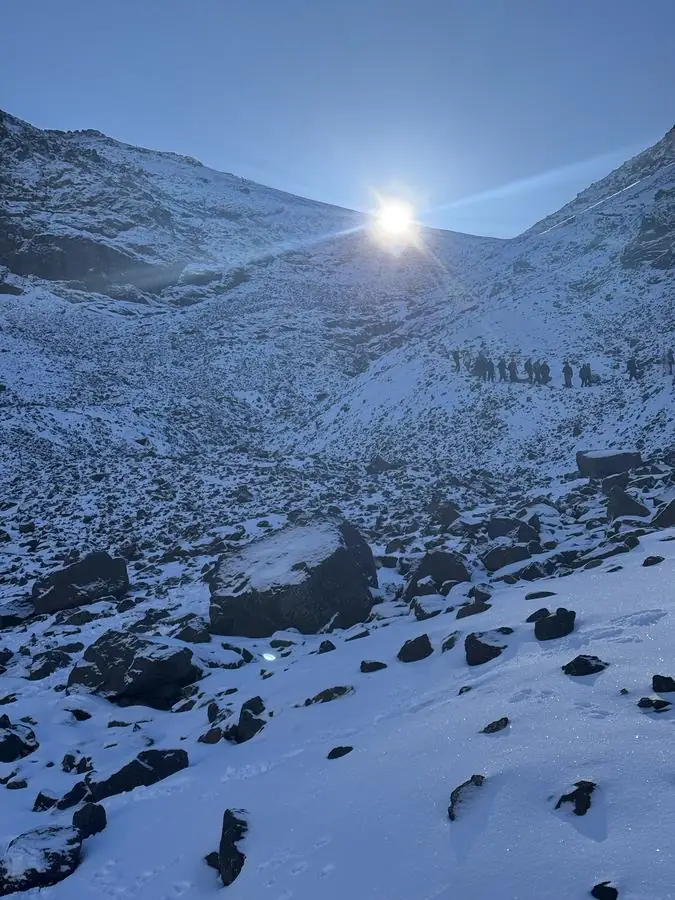
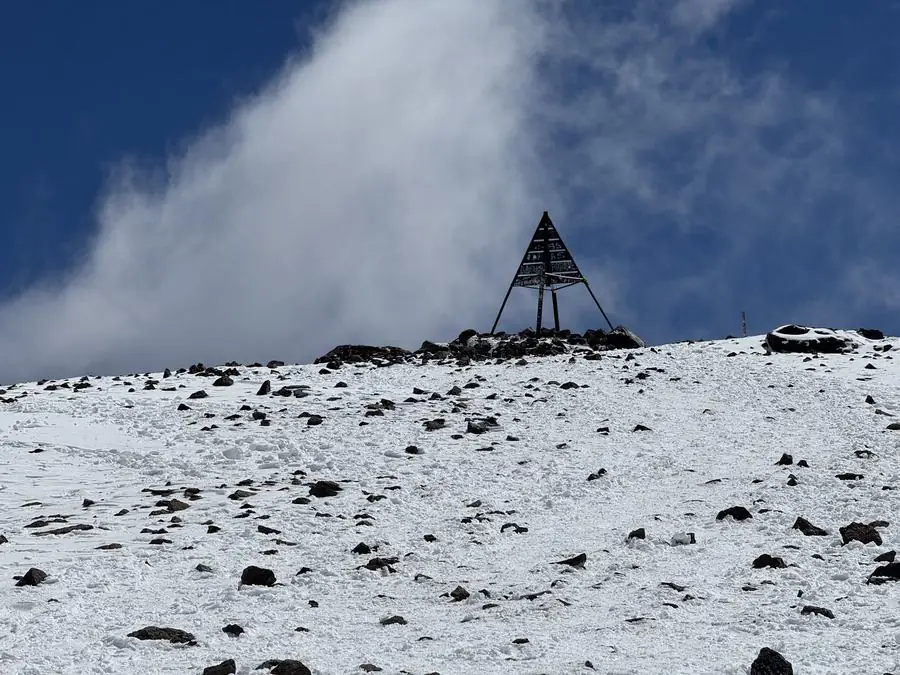
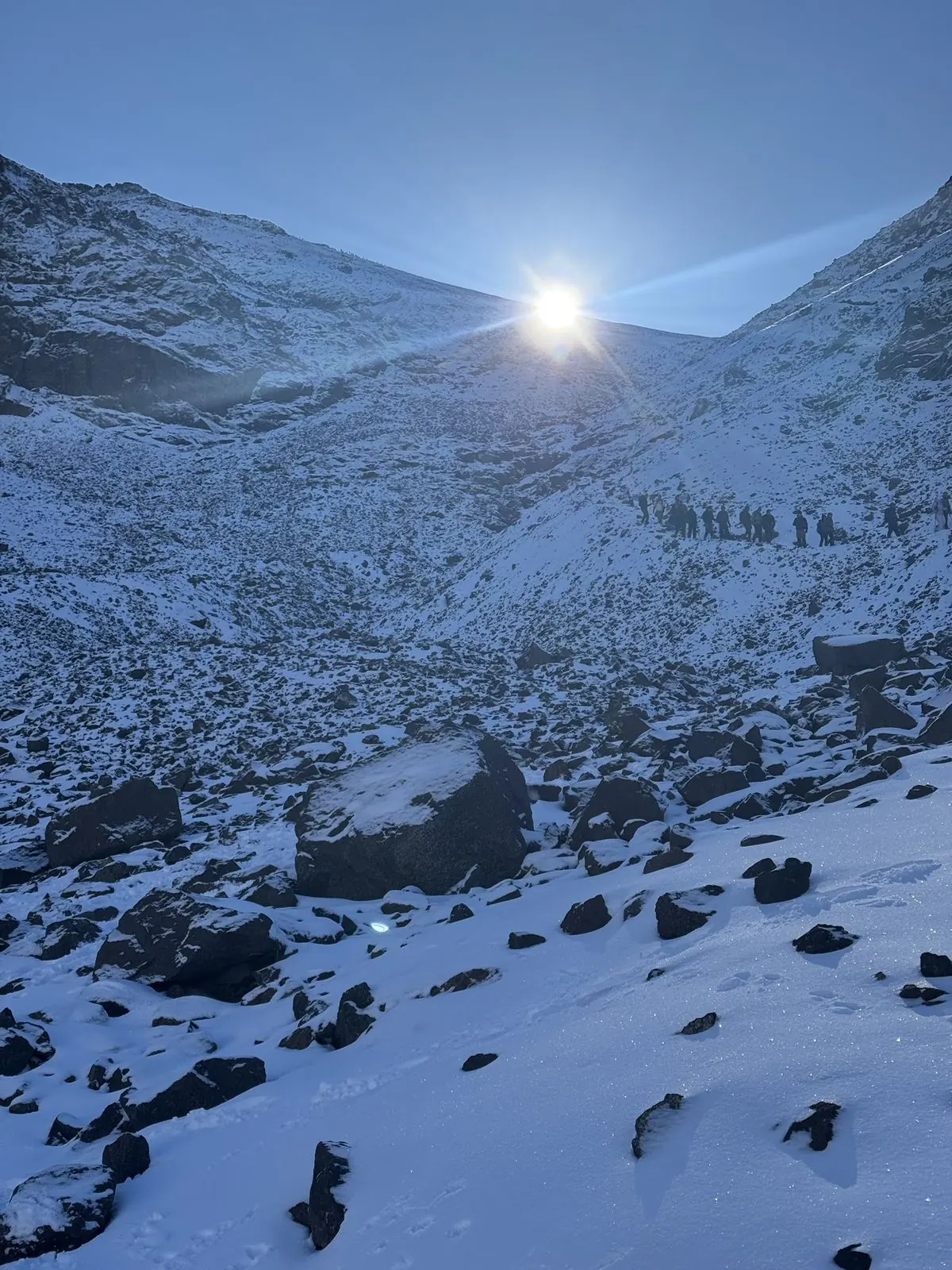
From December to March, the High Atlas above about 2,500 metres is usually covered in snow. Toubkal becomes a genuine winter mountaineering objective, requiring crampons, an ice axe and an experienced guide. For trekkers without winter experience, our winter ascent includes a skills session on how to walk in crampons and how to self-arrest with an ice axe.
Sunny valleys
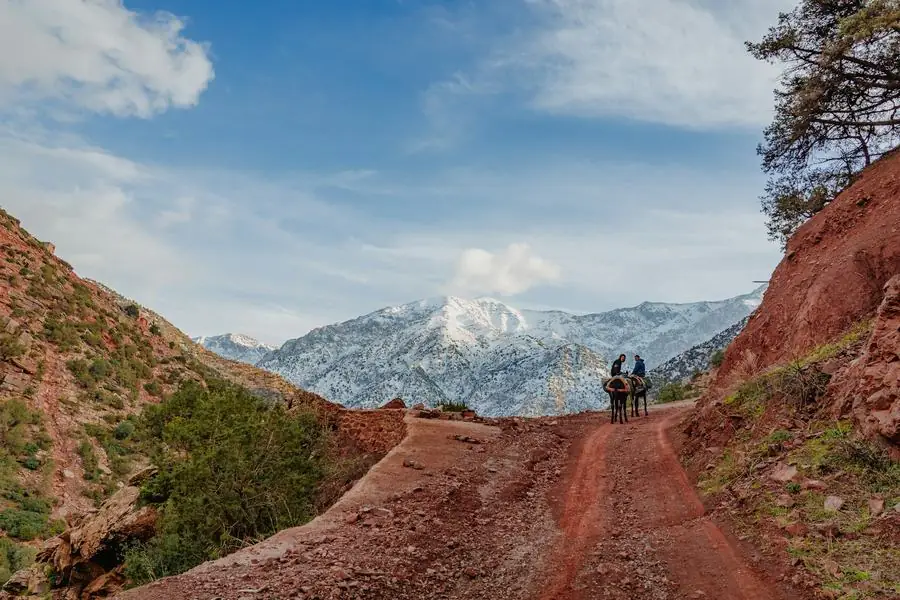
Lower down, the valleys around Imlil and Ouirgane are often bright and pleasant during the day, though cold at night. Village walks and passes below 2,300 metres can usually be done without special equipment, and snowy peaks make a dramatic backdrop.
Desert mountains
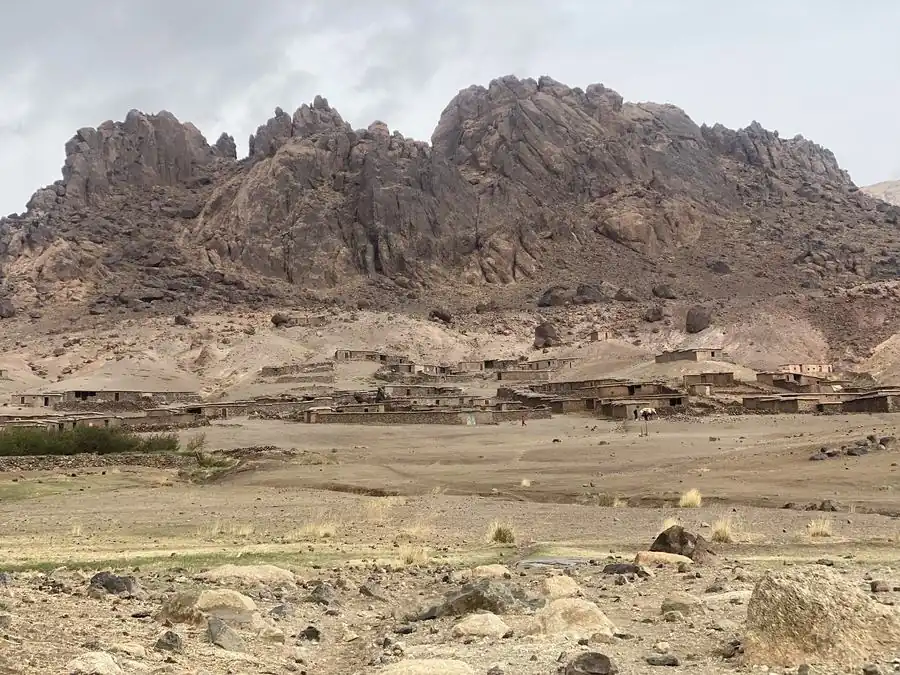
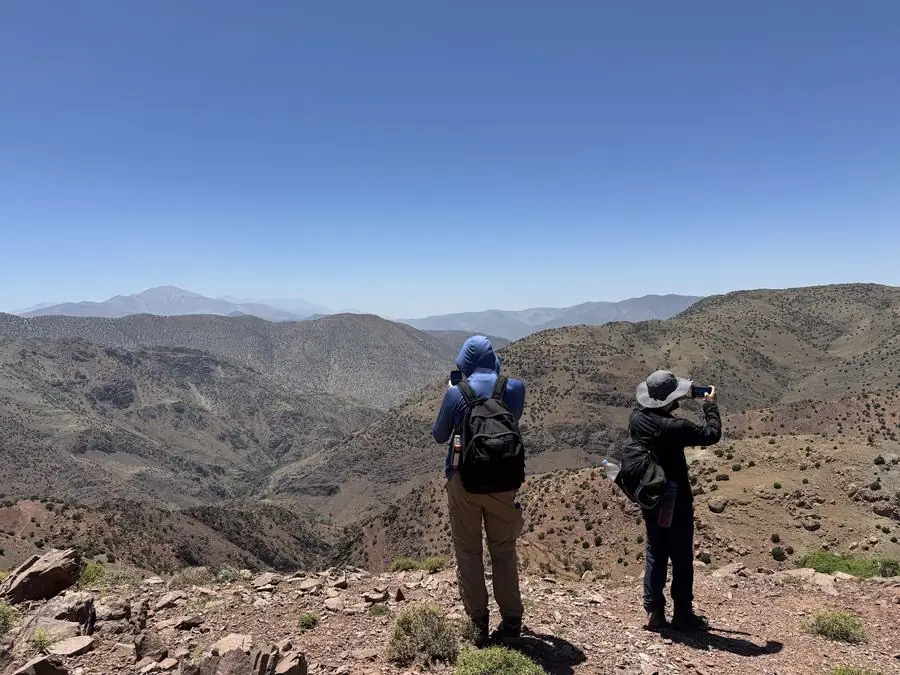
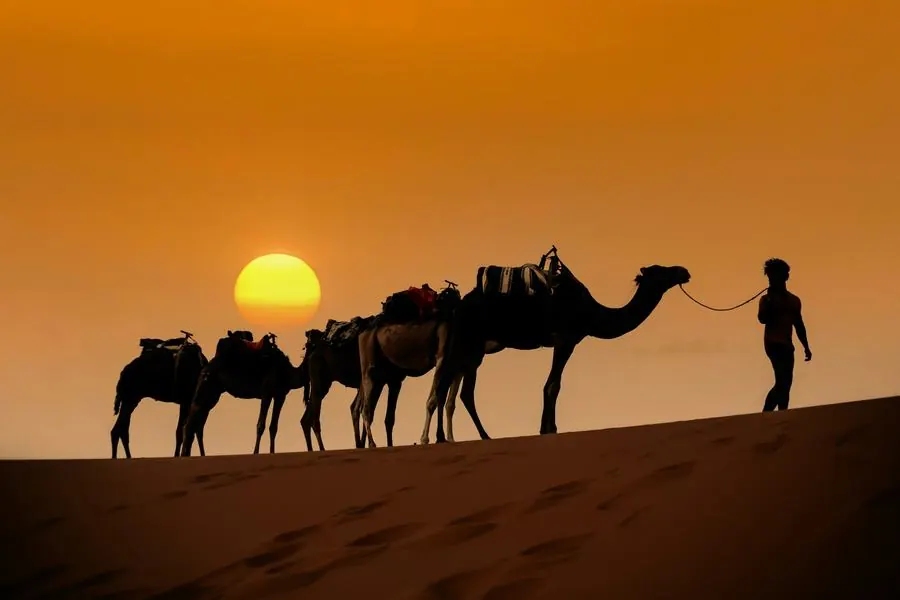
Winter is peak season for Jbel Saghro, the Anti-Atlas and the Sahara. Daytime temperatures are perfect for walking, while nights are crisp and spectacularly starry. Almond trees blossom in the Anti-Atlas from late January.
What to bring
A warm sleeping bag, down jacket, thermal layers, warm gloves and a hat are essential. Guesthouses are heated with wood stoves, and a hot hammam at the end of the day is a winter treat.