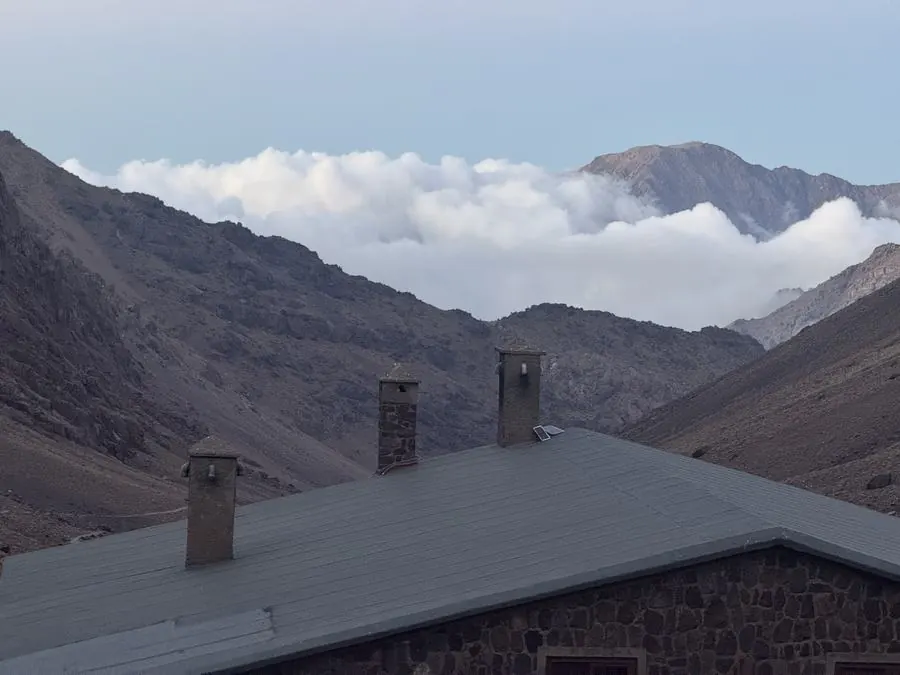
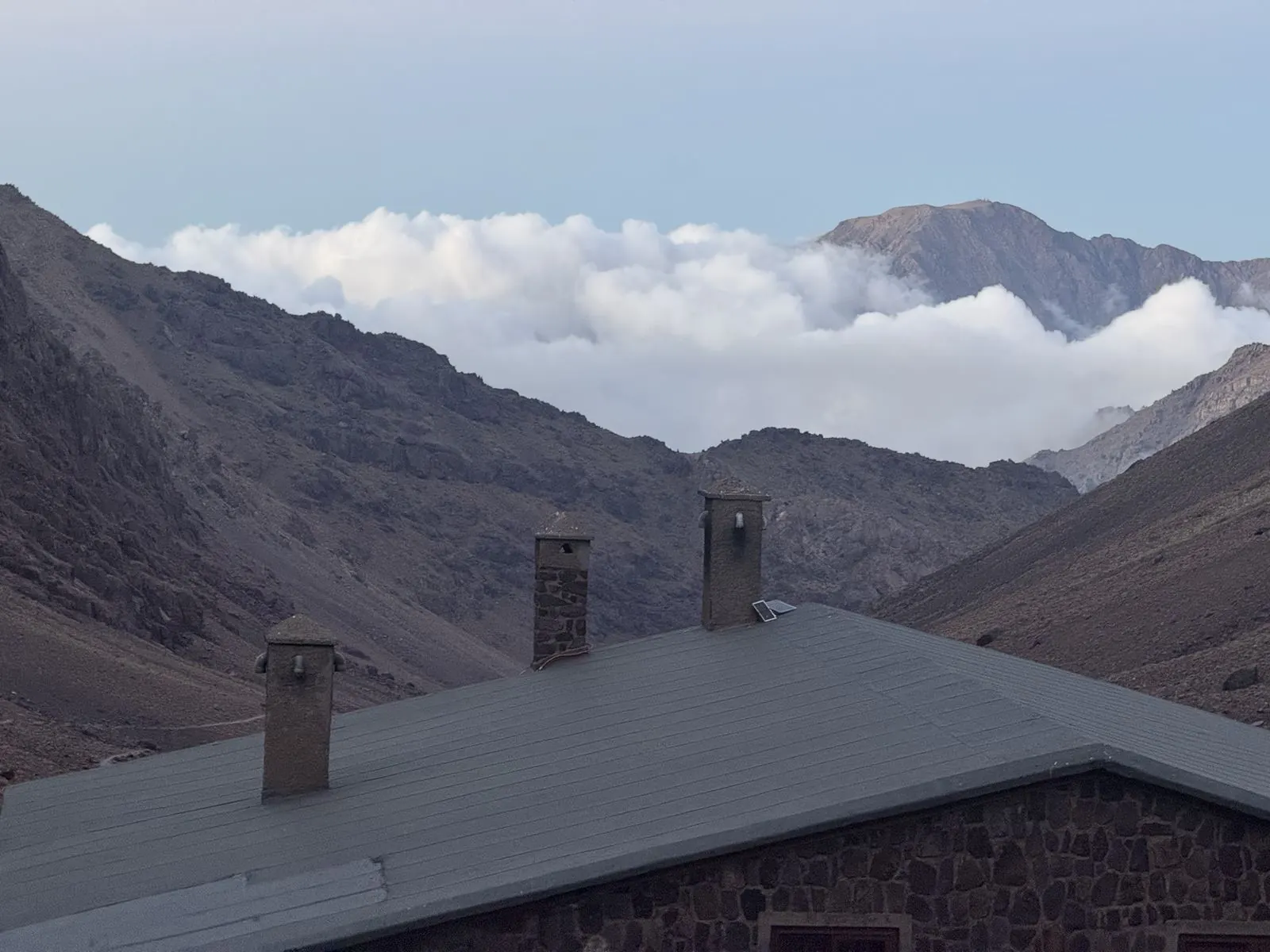
Every Toubkal climb passes through the same place: a cluster of stone huts at 3,207 m, tucked under the south cirque of North Africa's highest mountain. Whether you stay one night or two, the refuge is where you eat, rest, acclimatise and set the alarm for summit morning. Here is what to expect — from the dormitories and food to what to pack in your overnight bag.
- Altitude: 3,207 m
- Two huts: CAF Toubkal Refuge (Neltner) and Les Mouflons
- From Imlil: 5–6 hours on foot, bags by mule
- Bring: warm sleeping bag, head torch, power bank
Two refuges, one base camp
There are two refuges side by side at the head of the Mizane valley. The older and larger is the CAF Toubkal Refuge, also called the Refuge du Toubkal or Refuge Neltner, run by the Club Alpin Français. Next to it is Les Mouflons, a privately run refuge. Both offer dormitory beds and meals. All of our Toubkal treks use the CAF Toubkal Refuge; if it is full on a busy weekend we book a bed of the same standard next door.
Getting there
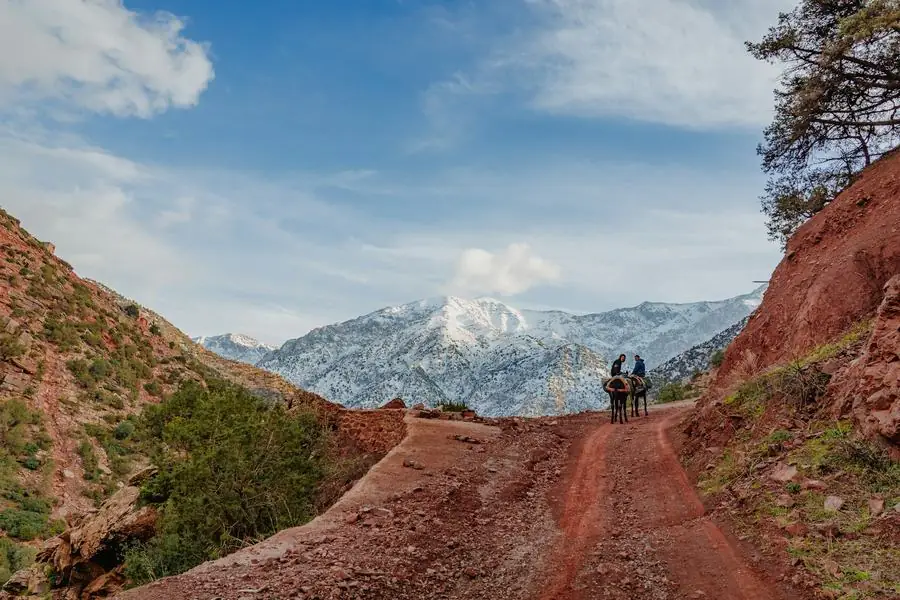
From Imlil (1,740 m) the path climbs gently to the village of Aroumd, crosses a wide flood plain, then follows the Mizane valley to the small shrine of Sidi Chamharouch at about 2,350 m, where stalls sell drinks and fresh orange juice. From there a well-made mule track zigzags up the side of the valley to the refuge. Most people take five to six hours, with lunch on the way. Your luggage goes up by mule, so you only carry a day pack. On a 3-day trek you start from Tamatert instead, crossing to the Mizane valley on the second day.
Rooms and beds
Sleeping is in dormitories of bunk beds with mattresses, from small rooms to large shared ones. Blankets are provided, but nights are cold — near or below freezing for much of the year — and the dorms are not heated. Bring or rent a warm sleeping bag; it is also more hygienic. Earplugs are a good idea: summit teams start moving around 4 am.
Downstairs there are dining rooms and a lounge, warmer than the dorms, where trekkers from all over the world swap stories over tea. Boots are left on racks at the entrance and you change into hut sandals.
Food and water
On our treks, your dinner and breakfast are included. Expect hearty mountain food: soup, a tagine or couscous, bread, fruit and endless sweet mint tea, followed by porridge or bread, jam, eggs and coffee before the summit. Bottled water and snacks can be bought at the refuge, but at higher prices than in Imlil because everything comes up by mule. Bring a reusable bottle and water purification tablets if you prefer not to buy plastic.
Toilets, showers and charging
Toilets and basic washrooms are shared. Hot showers exist but are not always available, especially in winter — think of the refuge as a mountain hut, not a hotel. Electricity is limited, so carry a power bank and keep your phone warm in your sleeping bag; cold drains batteries fast.
Altitude at the refuge
At 3,207 m many people feel the altitude on their first evening: a mild headache, less appetite, restless sleep. Drink plenty, walk slowly, eat even if you aren't hungry, and tell your guide how you feel. Symptoms that get worse rather than better mean going down. Read our guide to altitude sickness on Toubkal, and see why an extra night lower down helps in Toubkal in 2 days or 3?
What to pack for the night
- Warm sleeping bag (or rent one in Imlil)
- Down or synthetic jacket, hat and gloves — even in summer
- Head torch for the pre-dawn start
- Power bank, earplugs and a small towel
- Hut sandals or light shoes if you prefer your own
- Small notes in dirhams for drinks and snacks
Our full Atlas trek packing list covers the rest.
Summit morning
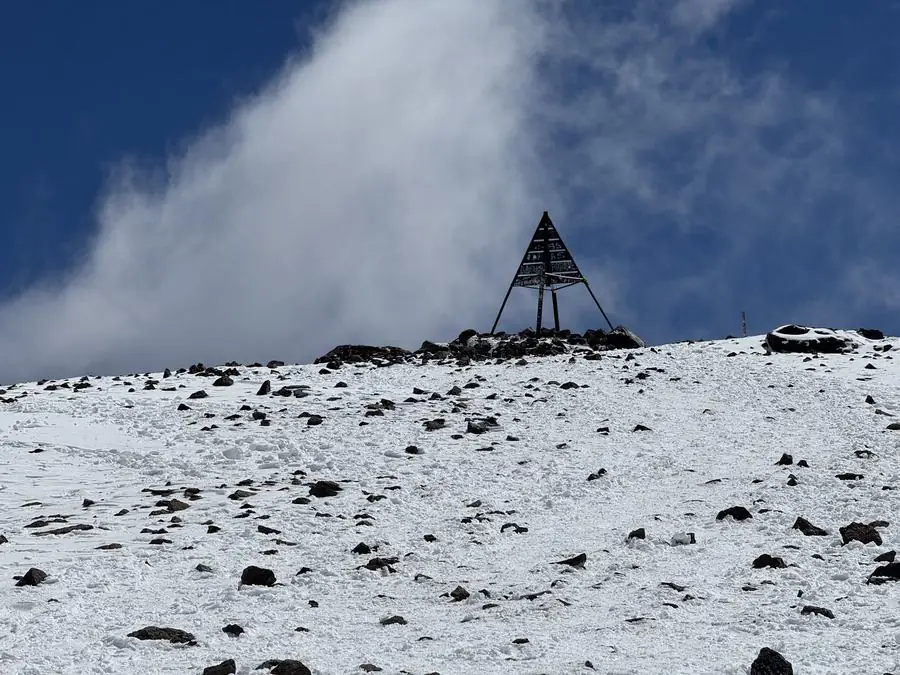
Breakfast is usually around 4–5 am, and teams leave by head torch. The path climbs the south cirque over scree and boulders, reaching the summit tripod in three to four hours. Sunrise over the Anti-Atlas and, on clear days, the hazy line of the Sahara is worth every cold minute. You return to the refuge for a hot drink and to collect your bags before descending to Imlil.
Frequently asked questions
Can I book the Toubkal refuge myself?
Yes, though since guides are compulsory most people go with a trek that books it for them. In spring and autumn weekends the refuges get busy, so book early.
Is the refuge open all year?
Yes, it is staffed year-round, including winter, when it is the base for snow ascents.
Can I camp instead?
Camping near the refuge is possible on some private trips, but in most seasons the refuge is warmer and more comfortable.