It is the question we are asked more than any other: should I climb Mount Toubkal in two days or three? Both reach the same 4,167 m summit, the highest point in North Africa. The difference is how your body feels on the way up and how much of the High Atlas you actually see. Here is how the two itineraries compare, and who each one suits.
- 2 days: from €345 — fit hikers short on time
- 3 days: from €520 — better acclimatisation, recommended
- Same summit: 4,167 m, same summit day
- Winter: we only run Toubkal over 3+ days
The 2-day climb in brief
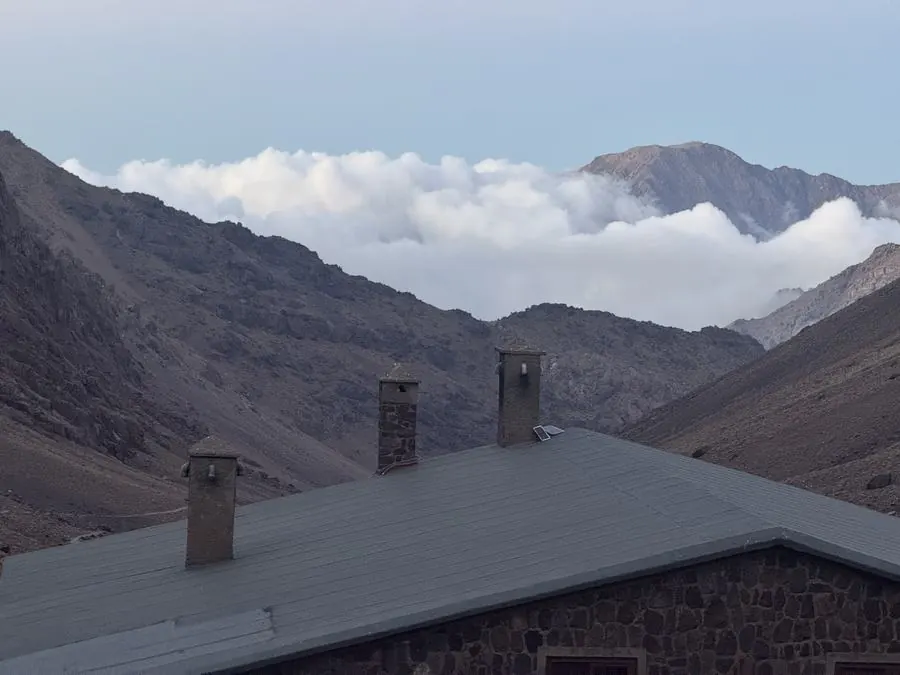
Day 1: early pick-up in Marrakech, drive to Imlil (1,740 m) and walk up the Mizane valley past Aroumd and the shrine of Sidi Chamharouch to the CAF Toubkal Refuge at 3,207 m. That is around 1,450 m of ascent in five to six hours of walking.
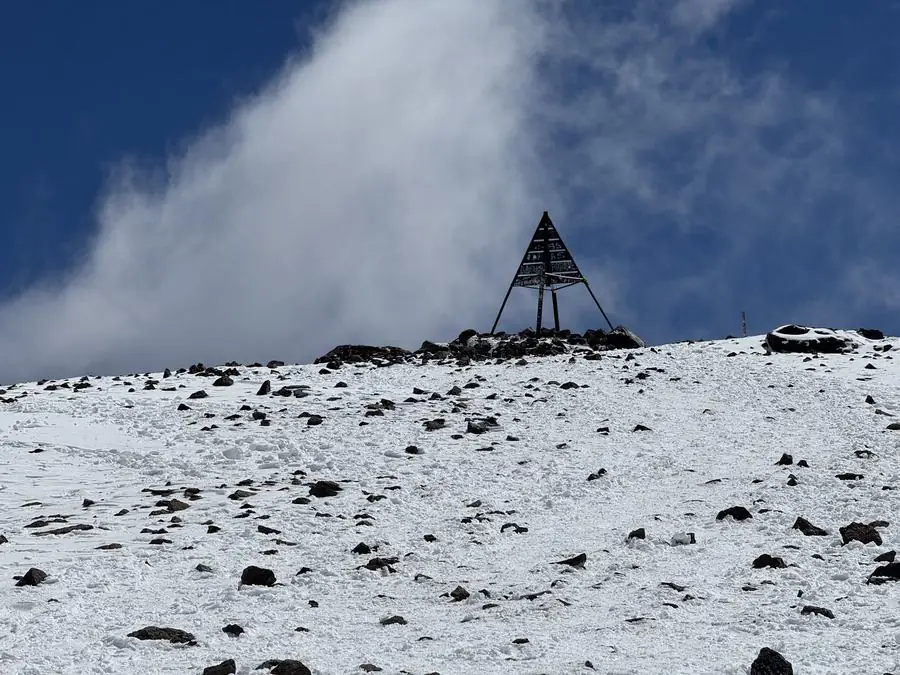
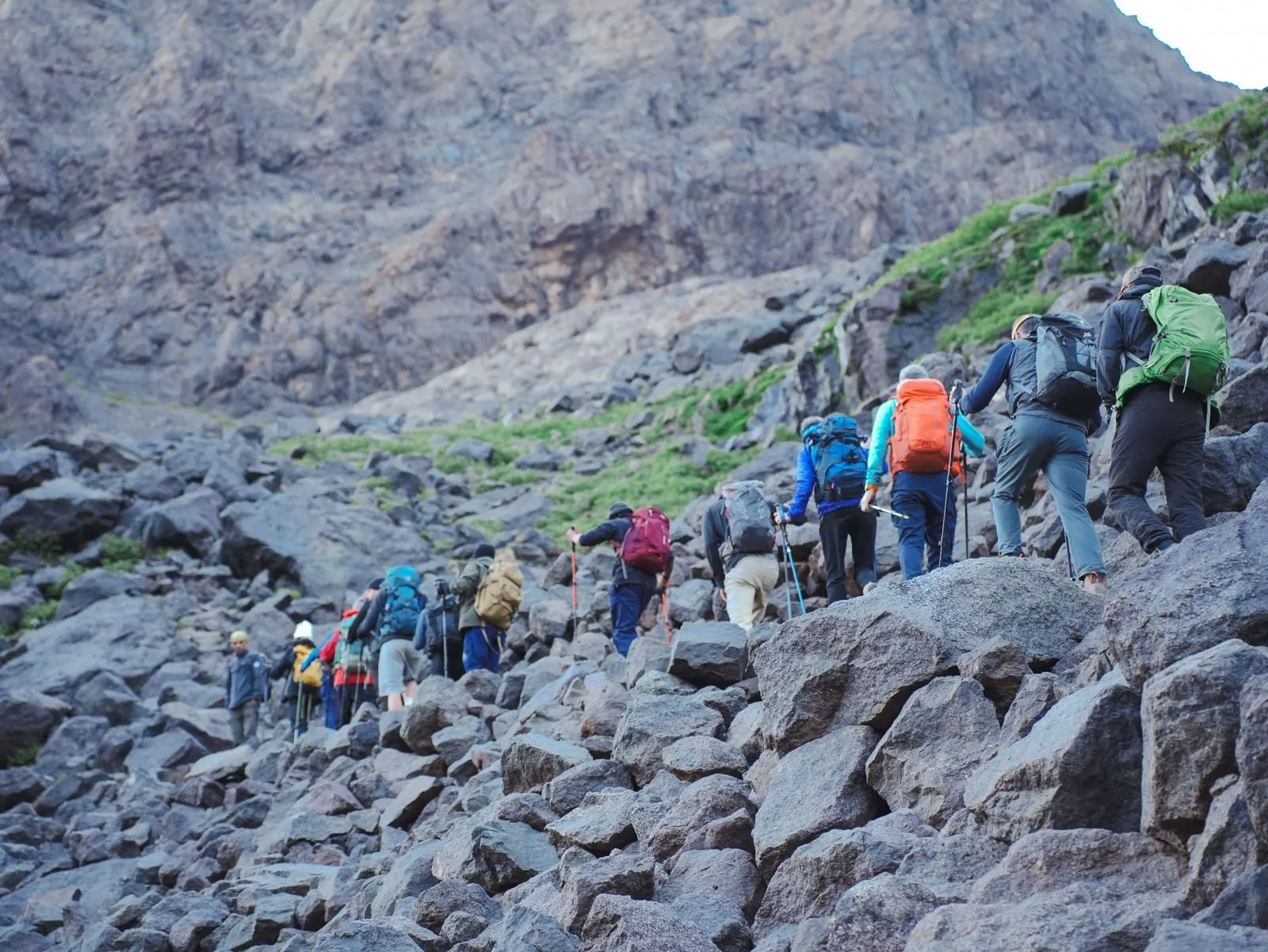
Day 2: start before dawn, climb the south cirque to the summit (three to four hours), then descend all the way to Imlil and drive back to Marrakech. Expect roughly 960 m of ascent and 2,400 m of descent, and a day of ten to twelve hours.
It works, and thousands of people do it every year. But it asks you to sleep at 3,200 m on your first night in the mountains, coming straight from a city at 450 m, and then to finish with one of the longest descents you will ever walk.
The 3-day climb in brief
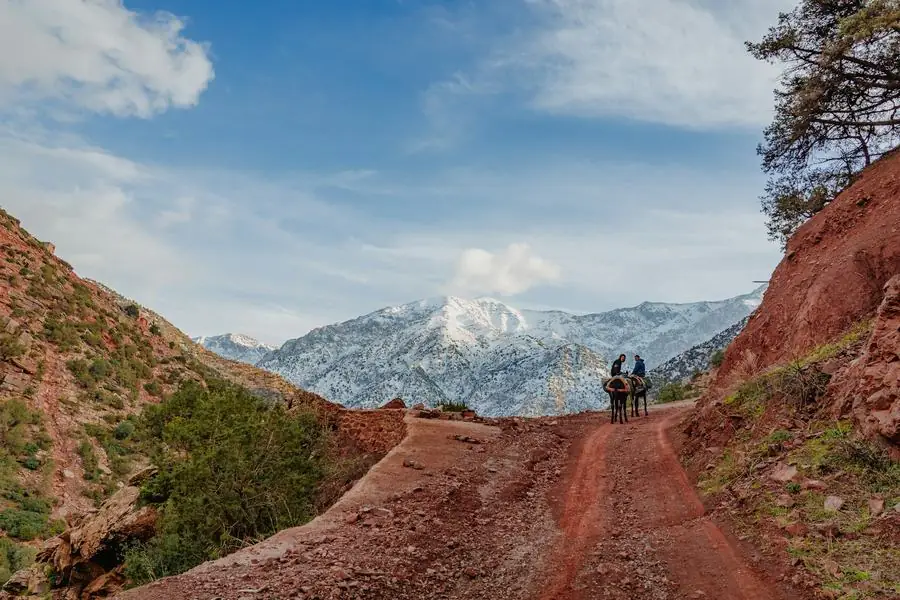
Our Toubkal 3-Day Trek adds one day at the start. You walk from Imlil over the Tizi n'Tamatert pass to a family guesthouse in the village of Tamatert, sleep at around 1,900 m, and walk on to the refuge the next day. Summit day is the same, but you arrive at the refuge with a night of acclimatisation behind you and legs that have already warmed up on easier ground.
| 2 days | 3 days | |
|---|---|---|
| Price (per person) | From €345 | From €520 |
| Nights | 1 (CAF Toubkal Refuge) | 2 (village guesthouse + refuge) |
| Acclimatisation | None | One night at about 1,900 m |
| Hardest day | Summit + full descent to Imlil | Summit + full descent to Imlil |
| Villages and passes | Aroumd, Sidi Chamharouch | Adds Tizi n'Tamatert and Tamatert |
| Best for | Fit hikers short on time | Most people, first-timers |
Why we recommend three days for most people
Altitude. Mild altitude sickness — headache, nausea, poor sleep — is common at the refuge, and it is the main reason people turn back on summit morning. You cannot train for it; the only proven help is ascending gradually. One extra night lower down makes a real difference to how you sleep at 3,207 m. Our article on altitude sickness on Toubkal explains the symptoms and what to do.
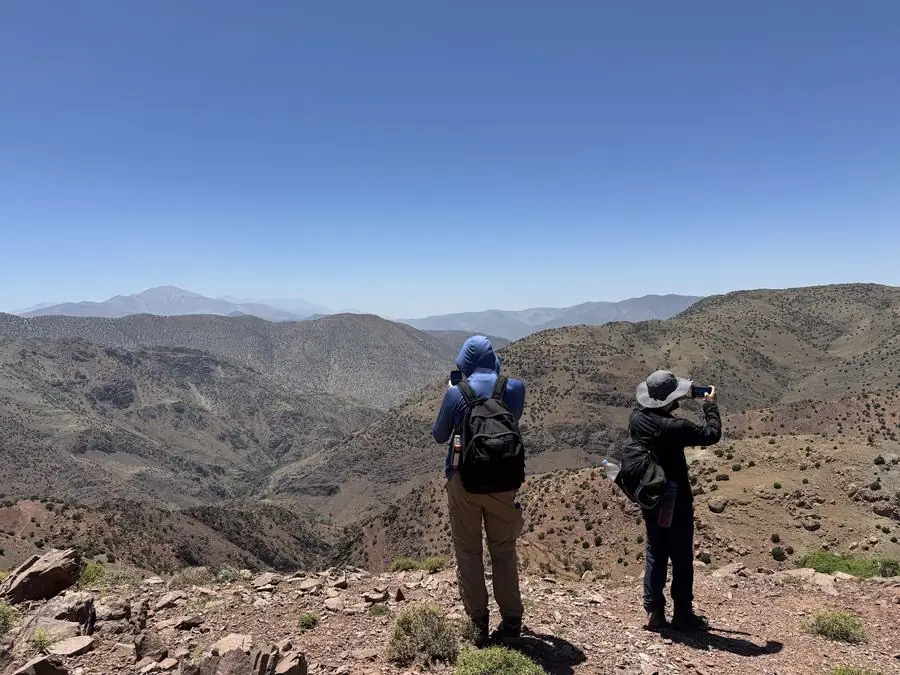
Enjoyment. On the 2-day trek you spend most of your waking hours either in a minibus or walking uphill. The extra day is the part people remember: terraced barley fields, an afternoon of mint tea on a guesthouse roof, and the view across to the whole Toubkal massif from Tizi n'Tamatert.
Safety margin. If the weather turns, a 3-day plan has slack in it. On a 2-day plan, a storm on day two usually means no summit.
When two days is the right choice
If you hike regularly, have been above 3,000 m before without problems, and only have a weekend, the Mount Toubkal 2-day trek is a great adventure. Go between late May and October, when there is usually no snow on the route, and do some long days with big descents in the weeks before. Our article on how fit you need to be has a simple training plan.
And if you have four days?
Take them. The Toubkal & Ouanoukrim 4-day trek spends two nights at the refuge, so you can climb Toubkal one day and Ouanoukrim (4,089 m), North Africa's second-highest summit, the next — with time to acclimatise properly in between. For something longer still, the six-day Toubkal Circuit loops right round the massif.
Winter changes everything
From roughly December to March, and often into April, the upper mountain is under snow. Crampons and an ice axe are essential, days are shorter, and the refuge is colder. In winter we only run Toubkal over at least three days; see the Toubkal winter ascent and our winter trekking guide.
Frequently asked questions
Can you climb Toubkal in one day?
Very fit, acclimatised mountaineers sometimes do Imlil–summit–Imlil in a single push, but it is around 2,400 m of ascent and descent. We don't offer it and don't recommend it.
What is the success rate on the 2-day trek?
Most people who are fit and well reach the top in summer. The usual reasons for turning back are altitude symptoms and fatigue, both of which an extra day reduces.
Where do you sleep on a Toubkal trek?
Below the summit at the CAF Toubkal Refuge, a stone mountain hut with dormitories and hot meals. Read what to expect at the refuge.
Do I need a guide?
Yes. A licensed mountain guide has been compulsory in Toubkal National Park since 2019, and every one of our treks includes one.