At the end of a trek in the Atlas, there is always a slightly awkward moment: the team has looked after you for days, and you want to say thank you properly — but how much is right? Tipping is customary in Morocco and makes up a real share of mountain staff's income. Here is a clear, fair guide, written by people who work on both sides of the envelope.
- Guide: about 100–200 MAD per trekker per day
- Cook / muleteer: about 50–100 MAD per trekker per day
- When: at the end, in dirhams, an envelope for each
- Always: voluntary — reflect the service
Who is on your trekking team?
- The mountain guide leads the trek, keeps you safe, translates and tells the stories of the valleys. In Toubkal National Park he or she must hold an official licence.
- The cook prepares lunches on the trail and meals in camp on camping treks. On shorter treks the guide or the guesthouse often does the cooking.
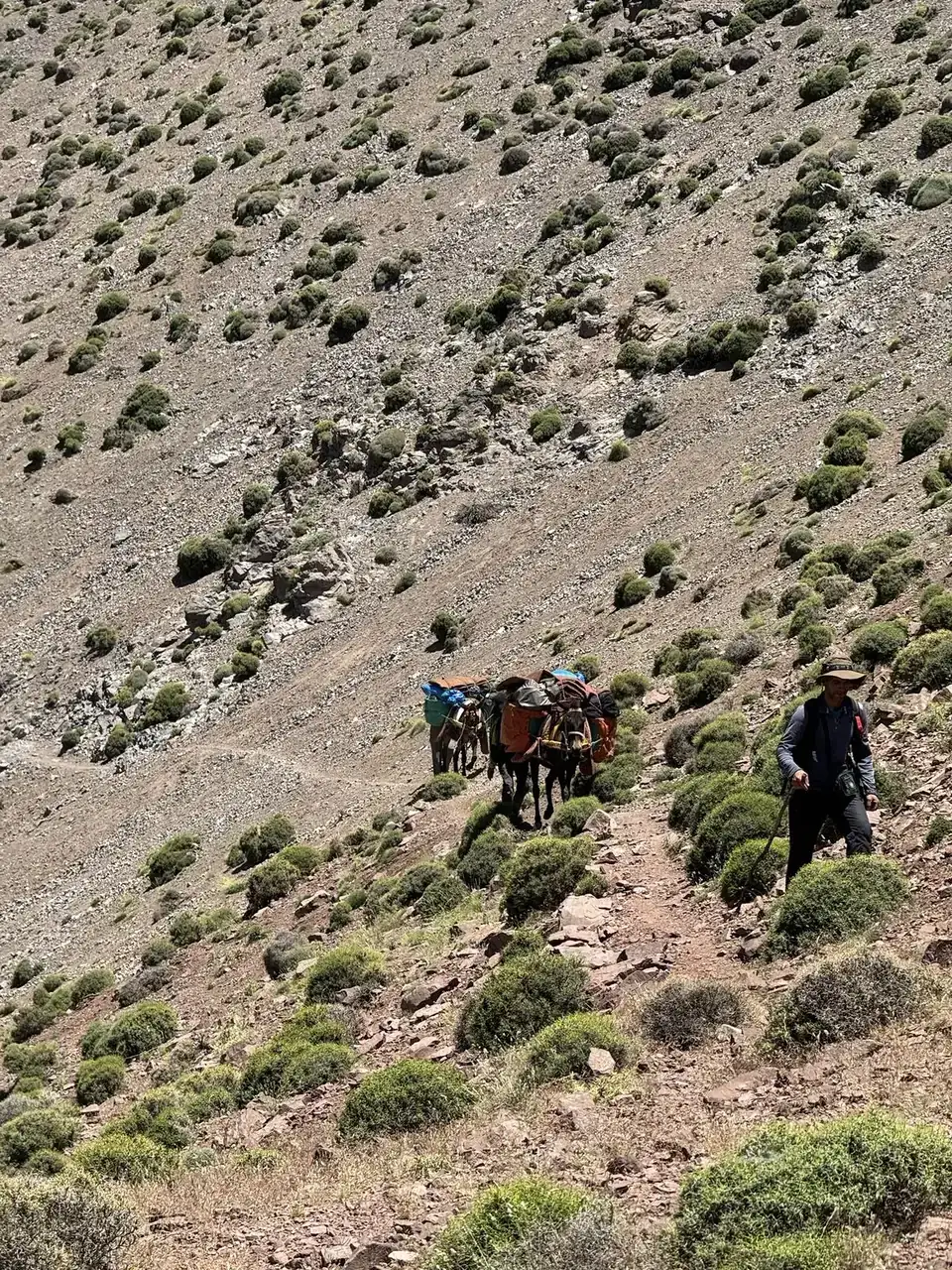
- The muleteer leads the mules that carry your luggage, and on many treks also helps in camp. Read more about these unsung heroes in the muleteers of the Atlas.
- The driver who brings you from Marrakech.
How much to tip: our guideline
These are suggestions, not rules. Tipping is always voluntary and should reflect how happy you were. Amounts are per trekker, for a small group of two to four people; in larger groups each person can give a little less, because the total is shared among more people.
| Who | Per trekker, per day | Notes |
|---|---|---|
| Mountain guide | 100–200 MAD (€10–20) | The most important tip |
| Cook | 50–100 MAD (€5–10) | On treks with a dedicated cook |
| Muleteer | 50–100 MAD (€5–10) | Usually per muleteer, shared if several |
| Driver (day trip) | 20–50 MAD | For a full day's driving |
| Guesthouse or refuge staff | Optional | Rounding up is enough |
As a simple rule of thumb, many trekkers set aside an amount equal to about 10% of the trek price for the team, and adjust it up or down from there.
Examples
Day hike from Marrakech (for example the Imlil day hike): 50–100 MAD per person for the guide and something for the driver.
Toubkal in 2–3 days, two trekkers with a guide and a muleteer: around 200–400 MAD each in total, with roughly two-thirds to the guide.
A 6-day trek such as the Toubkal Circuit, group of four with guide, cook and two muleteers: put together a group kitty of a few thousand dirhams and split it between the team.
How and when to tip
- At the end, not each day. The last evening or the final lunch is the traditional moment.
- In dirhams, in clean notes. Euros are accepted but cost the team money to change. There are no cash machines in the mountains, so withdraw in Marrakech.
- Person to person. Give each team member their own envelope, or give the guide a clearly labelled envelope for each person. Handing everything to the guide to "share out" is less fair to the muleteers.
- Say why. A few words of thanks — or a tanmirt, "thank you" in Tashelhit — mean a lot. See our Berber phrases for trekkers.
Gifts instead of money?
Good quality gear you no longer need — a warm jacket, a head torch, walking poles — is often very welcome by guides and muleteers, on top of a tip rather than instead of it. Please don't hand out sweets or pens to children in the villages: it encourages begging. If you want to give, give to the school or a village association through your guide. Read our guide to responsible trekking.
Is a service charge included in the trip price?
No. On our trips the team is paid a fair wage, and tips are a personal thank-you on top. Our trip pages list tips under "Not included" so there are no surprises.
Frequently asked questions
Is tipping compulsory on a Morocco trek?
No, it is voluntary. But it is customary, and the team will be grateful for any amount that reflects good service.
Should I tip if I was not happy?
Tip what you feel is fair, and tell us why so we can fix it. Honest feedback helps us keep standards high.
How much cash should I bring for tips?
For a 3-day trek, budget about €30–50 per person; for a week-long trek, about €60–100. See what a Toubkal trek costs.