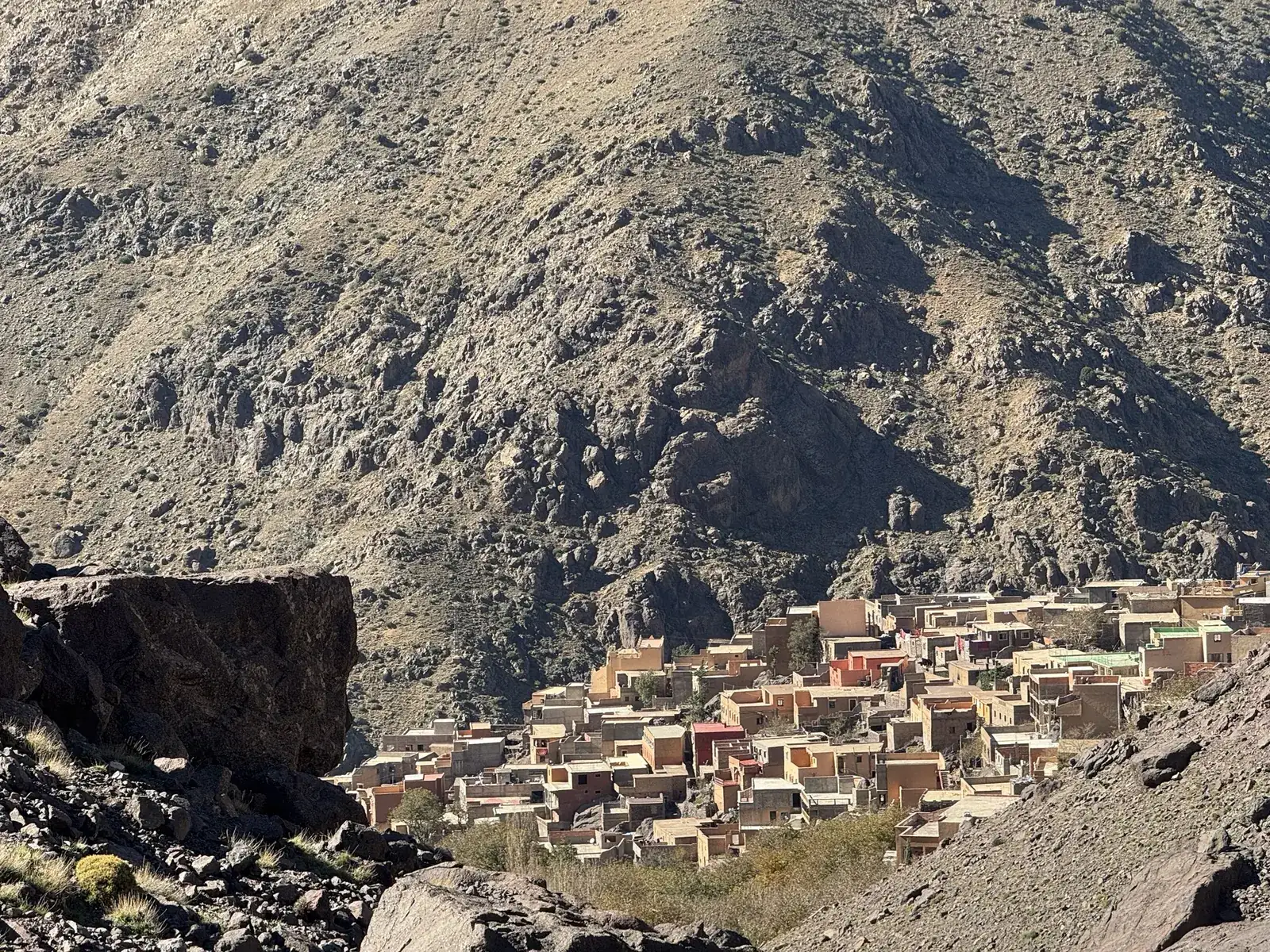
In the villages of the High Atlas, the first language is not Arabic or French but Tashelhit, the Berber (Amazigh) language of southern Morocco. You will be understood in French or English by your guide, but a few words of Tashelhit change everything: smiles, laughter and, very often, another glass of tea. Here are the words and phrases our guests find most useful on the trail.
- Hello: azul
- Thank you: tanmirt
- Water / bread / tea: aman / aghrum / atay
- Pass / river / mountain: tizi / asif / adrar
A quick note on the language
Morocco has three main Berber languages: Tarifit in the Rif, Central Atlas Tamazight in the Middle Atlas, and Tashelhit in the High Atlas, Anti-Atlas and Souss. Since 2011 Amazigh has been an official language of Morocco, and you will see its alphabet, Tifinagh, on road signs and school buildings. Spelling in Latin letters varies a lot, so don't worry about getting it perfect — pronunciation matters more, and people will be delighted that you tried. Everyday speech also mixes in many Arabic words, which we've included where they are what you will actually hear.
Greetings and politeness
| English | Say | Notes |
|---|---|---|
| Hello | Azul | The Amazigh greeting; salam alaykum is also used everywhere |
| How are you? | Manik antgit? | Answer: labas, "fine" |
| Fine, no problem | Labas | Used constantly |
| Thank you | Tanmirt | The most useful word you will learn |
| Yes / No | Iyyeh / Uhu | |
| Good, beautiful | Ifulki | For the view, the tagine, the day |
| Enough, finished | Safi | Handy when your tea glass keeps being refilled |
| Goodbye | Bslama | From Moroccan Arabic, understood everywhere |
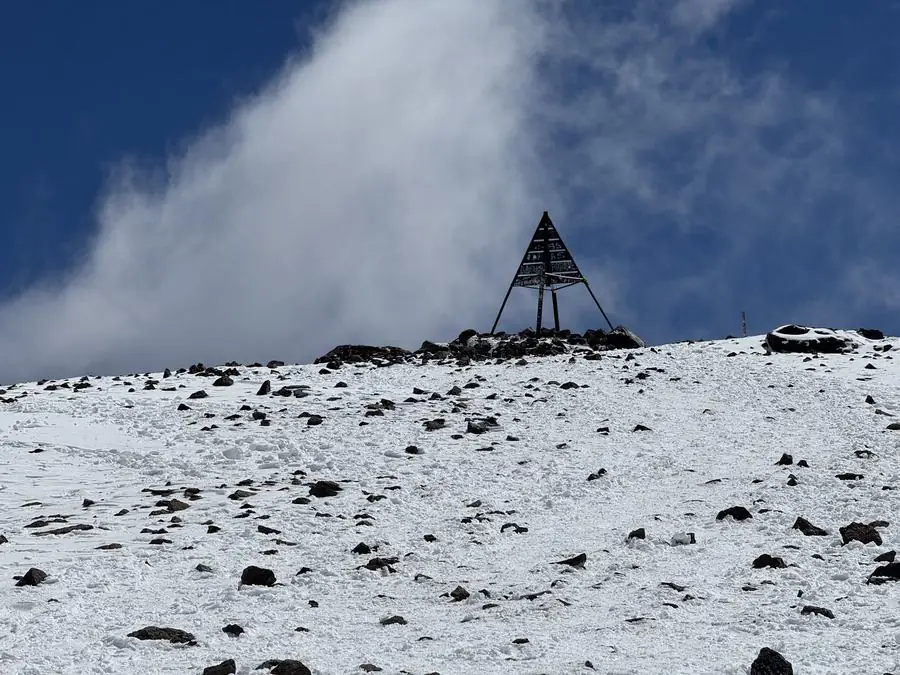
| God willing | Inshallah | Said about any future plan, including the summit |
Around the table
- Aman — water
- Aghrum — bread
- Atay — tea (read about the mint tea ritual)
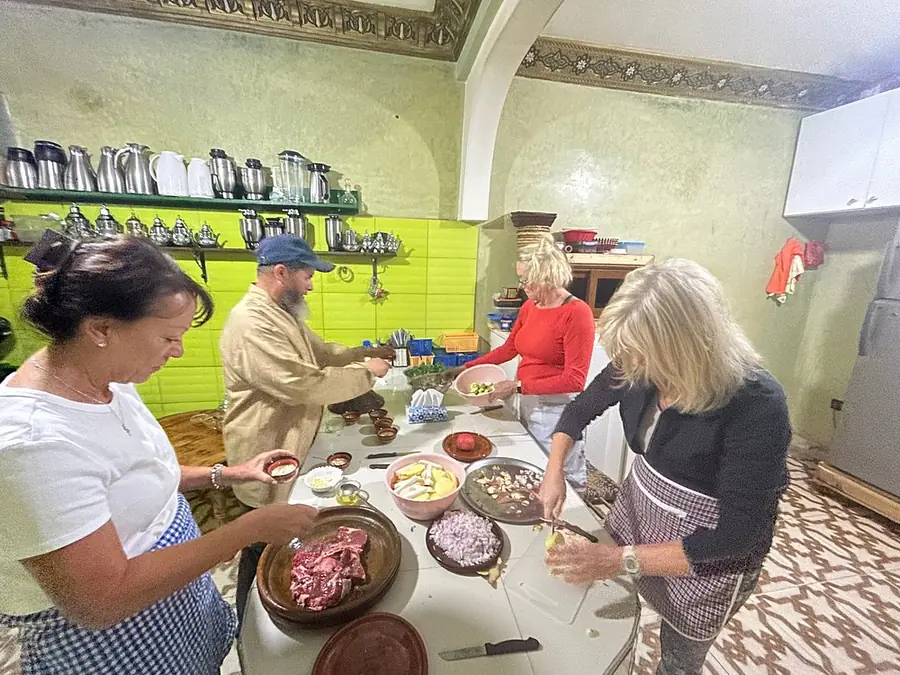
- Bismillah — "in the name of God", said before eating; you will hear it at every meal
Eat with your right hand, accept at least one glass of tea, and compliment the cook. Our article on Moroccan mountain food explains what you will be served.
Words you will see on the map
Learning a few landscape words makes the names of the Atlas suddenly make sense.
| Word | Meaning | Example |
|---|---|---|
| Adrar | Mountain | Used in many local peak names |
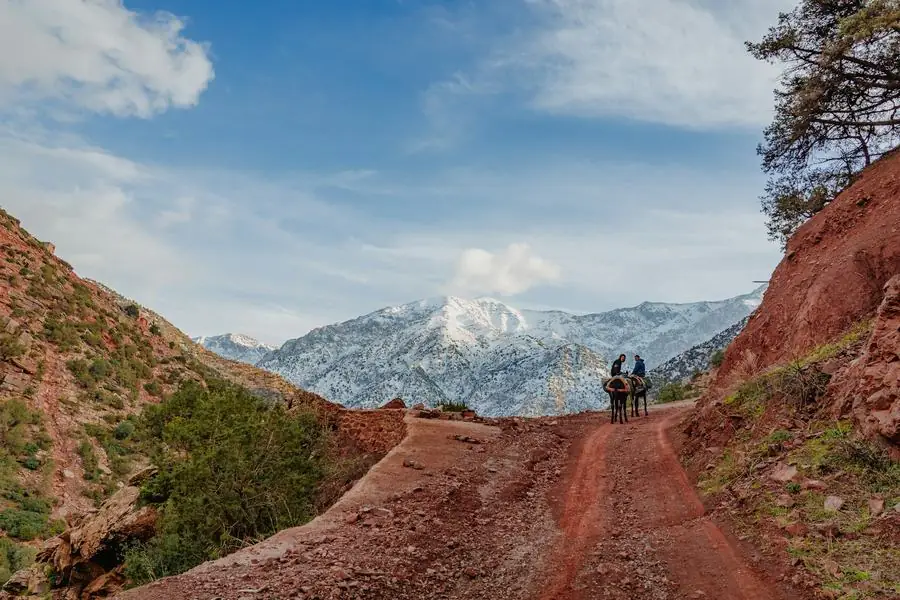
| Tizi | Pass, col | Tizi n'Tichka, Tizi n'Tamatert, Tizi n'Mzik |
| n' | "of" | Tizi n'Tichka = the pass of Tichka |
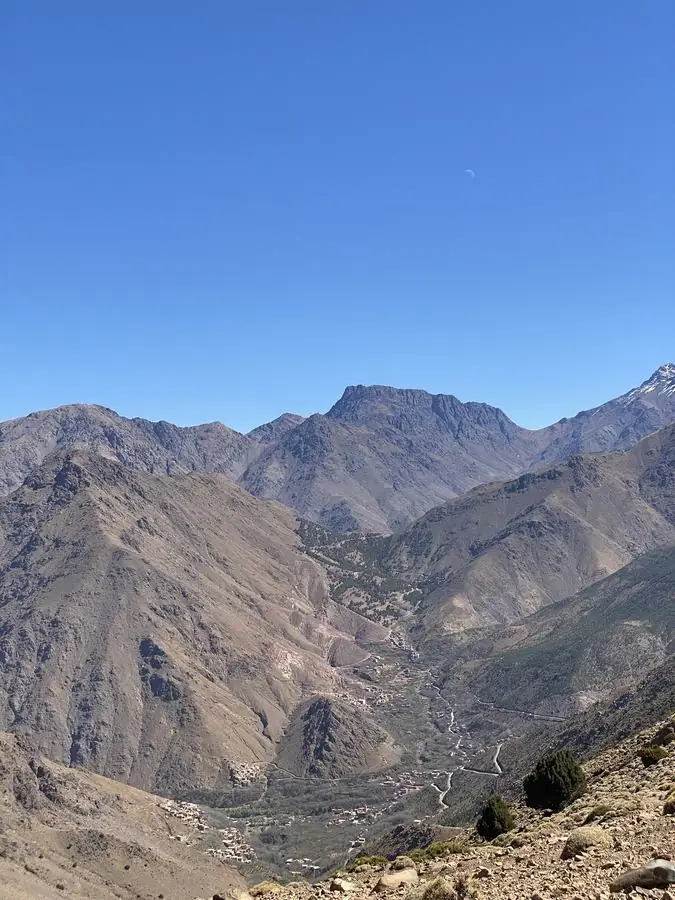
| Asif | River | The Mizane river below Toubkal |
| Imi | Mouth, opening | Imi n'Ifri |
| Ifri | Cave | Imi n'Ifri = mouth of the cave |
| Azib | Shepherd's summer hut | Azib Tamsoult |
| Agadir | Fortified granary | Found across the Anti-Atlas |
| Tighremt | Fortified house | The tall kasbah-like houses of the valleys |
Now you know why the natural rock bridge east of Marrakech is called Imi n'Ifri — see our Imi n'Ifri day trip.
Counting to three
Yan (one), sin (two), kraḍ (three). In practice, prices and times are usually given in Arabic or French numbers.
Tips for speaking with villagers
- Greet everyone you pass on the trail; it is normal and expected.
- Ask before photographing people, especially women. A smile and a gesture to the camera is enough; accept a no gracefully. See our photography tips.
- Let your guide introduce you when you enter a house.
- Learn more about everyday life in our article on Berber culture in the High Atlas.
Frequently asked questions
Do people in the Atlas Mountains speak English?
Guides and guesthouse owners usually speak good English and French. In the villages, most people speak Tashelhit and Moroccan Arabic.
Is Berber the same as Arabic?
No. Berber (Amazigh) languages are a separate family, spoken in North Africa long before Arabic arrived. Many Arabic words are used in daily speech, though.
How do you say thank you in Berber?
In the High Atlas, tanmirt.