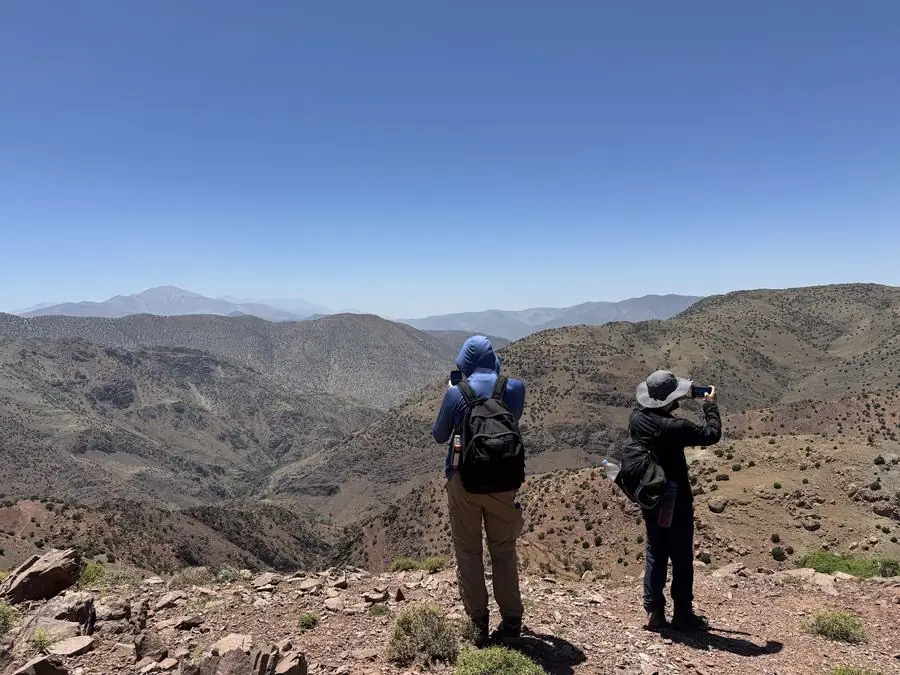
When you walk into a village above Imlil and someone calls out "Azul!" from a doorway, you are hearing Tashelhit, the language of the Shilha people. Almost everyone you meet in the western High Atlas, from the muleteers to the women working the terraces, is Shilha, and so are most of our guides. Understanding a little about who they are will change how you see the mountains, and how the mountains see you.
- Name: Shilha in English and Arabic; Ishelhin in their own language
- Language: Tashelhit, also written Tachelhit
- Where: the western and central High Atlas, the Anti-Atlas and the Souss plain
- Part of: the wider Amazigh (Berber) peoples of North Africa
Who are the Shilha?
The Amazigh (often called Berbers, although many prefer Amazigh, meaning "free people") are the original inhabitants of North Africa. In Morocco they form several large language groups. The Shilha are the largest of them, living across the western and central High Atlas, the Anti-Atlas and the fertile Souss plain around Agadir and Taroudant.
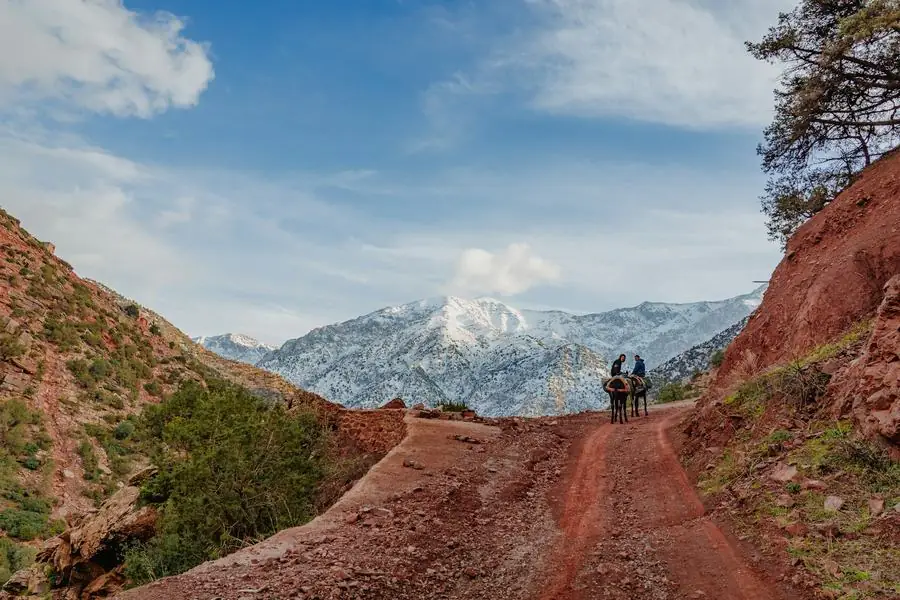
Shilha communities have shaped these mountains for centuries: the terraces, the irrigation channels, the fortified granaries and the mule paths you walk on were all built by them. Many Shilha families from the Souss are also known across Morocco as shopkeepers and traders, so you will meet them in every Moroccan city.
The Tashelhit language
Tashelhit is spoken by millions of people in Morocco, making it the most widely spoken Amazigh language in the country. Since 2011, Amazigh has been an official language of Morocco alongside Arabic, and you will see its ancient script, Tifinagh, on road signs and public buildings. Most people in the mountains also speak Moroccan Arabic (Darija), and many guides speak French and English too.
A few words go a very long way on the trail:
- Azul – hello
- Tanmirt – thank you
- Mamek tellit? – how are you?
- Iyyeh / Uhu – yes / no
- Atay – tea
Our Berber phrases for trekkers has many more, with pronunciation tips.
Village life
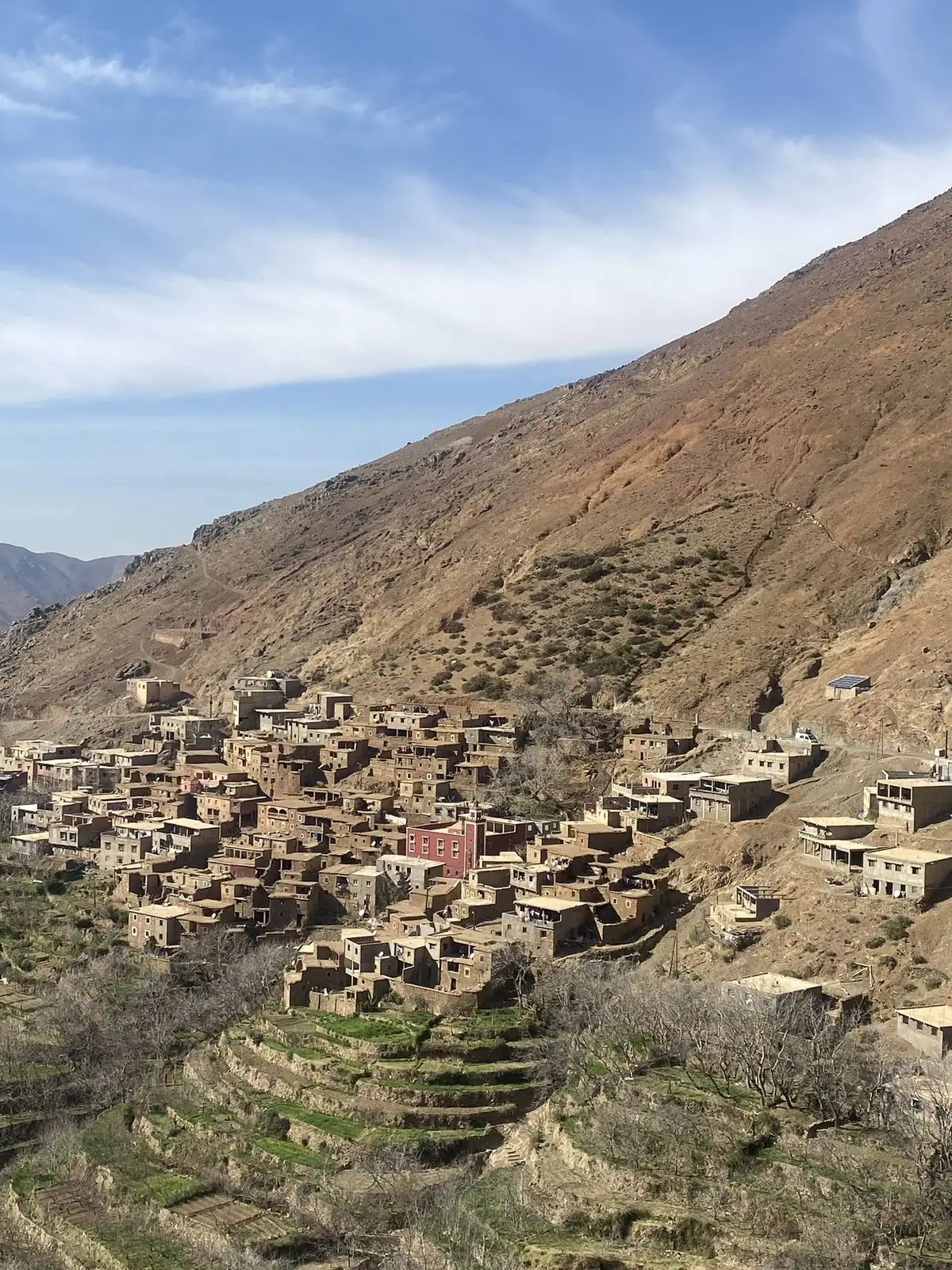
A typical Shilha village in the High Atlas is built of stone and earth on a slope, to leave the flat land free for crops. Houses have flat roofs used for drying fruit and grain, and families often share an extended household with grandparents, children and cousins. Water from the snowmelt is shared between families through a careful system of channels and turns, managed by the village assembly.
Life follows the seasons: ploughing in autumn, harvests of barley, walnuts and apples, and in summer the move of goats and sheep to the high pastures. Women do much of the farm work and carry huge bundles of fodder down the paths, something you will see on almost every walk.
Food and hospitality
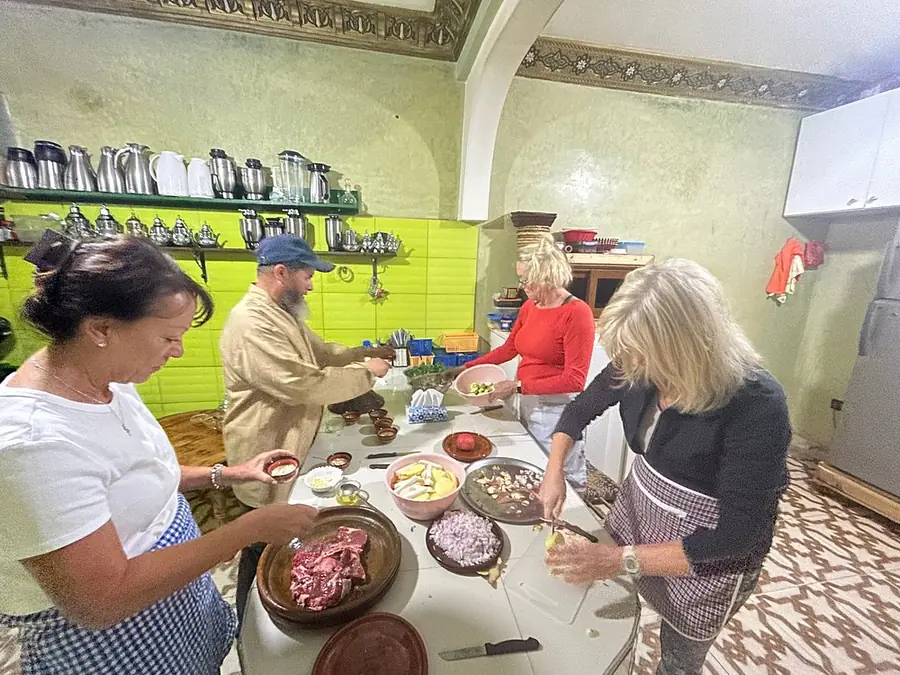
Hospitality is a point of pride. A visitor is offered mint tea, bread, olive oil and often butter or honey, and refusing everything can seem cold. Bread is baked daily in clay ovens, tagines cook slowly over charcoal, and on Fridays families share couscous. In the Souss, argan oil and amlou, a spread of argan oil, almonds and honey, are a speciality. Read more about Moroccan mountain food and the mint tea ritual.
Music, dance and festivals
Shilha music is famous across Morocco. In the villages, ahwash is a group dance and song performed in a circle, with drums and call-and-response singing that can go on long into the night at weddings and festivals. Professional travelling musicians, the rwais, sing poetry accompanied by the one-string rribab and the lute.
The Amazigh New Year, Yennayer, falls in mid-January and is now a public holiday in Morocco. Families mark it with special dishes and gatherings.
Visiting with respect
- Ask before taking photos of people, especially women. A smile and a gesture are usually enough to ask; accept a no gracefully.
- Dress modestly in villages: covered shoulders and knees.
- Learn a few words of Tashelhit. People are delighted when visitors try.
- Walk with a local guide. They open doors you would never find alone and make sure your money stays in the valley. See why book a local guide.
Frequently asked questions
Who are the Shilha people?
The Shilha (Ishelhin) are an Amazigh people of Morocco who live mainly in the western and central High Atlas, the Anti-Atlas and the Souss plain.
What language do the Shilha speak?
They speak Tashelhit (also written Tachelhit), the most widely spoken Amazigh language in Morocco. Most also speak Moroccan Arabic.
Are the Shilha Berbers?
Yes. The Shilha are one of the Amazigh peoples, who are often called Berbers. Many prefer the name Amazigh.
How do you say hello in Tashelhit?
Azul means hello, and tanmirt means thank you.