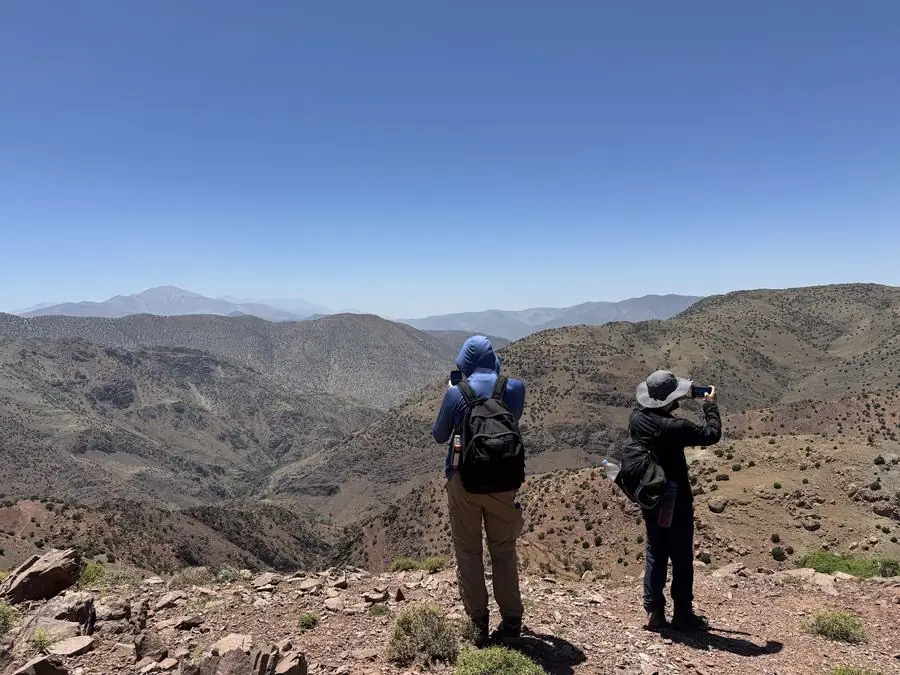
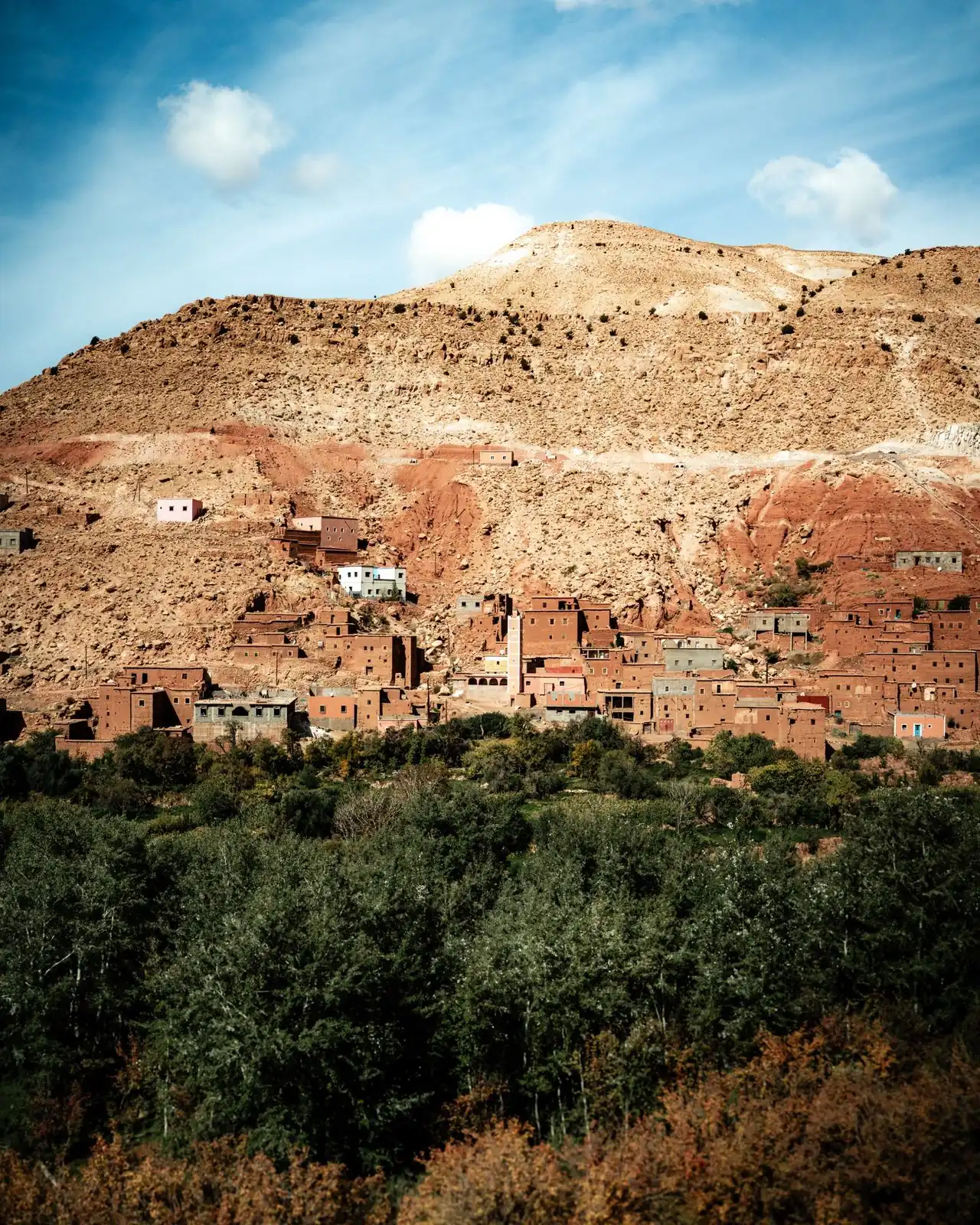
Most visitors to the High Atlas head straight for Imlil and Toubkal, and drive through Ouirgane without slowing down. That is a shame, because this valley is one of our favourite places to walk. It is lower, warmer and greener than Imlil, the earth is a deep red, and the villages are so quiet that you can hear the river from the path. If you want the mountains without the crowds, start here.
- Where: about 60 km south of Marrakech, on the road to the Tizi n'Test pass
- Driving time: about 1 hour from Marrakech
- Altitude: around 1,000 m, much lower than Imlil
- Best for: easy hikes, winter walking, families and slow travel
Why go to Ouirgane?
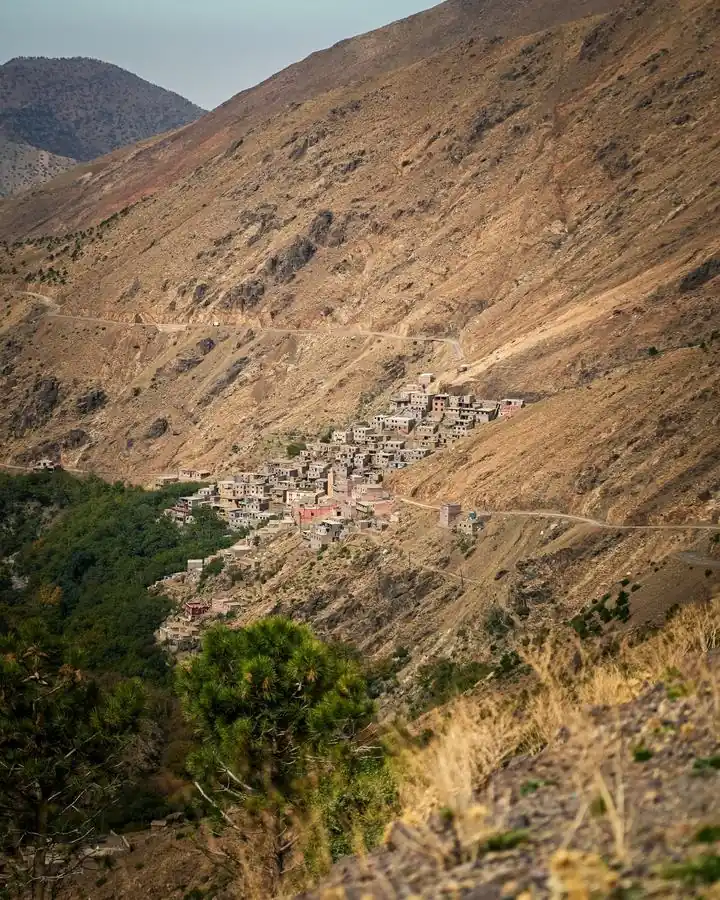
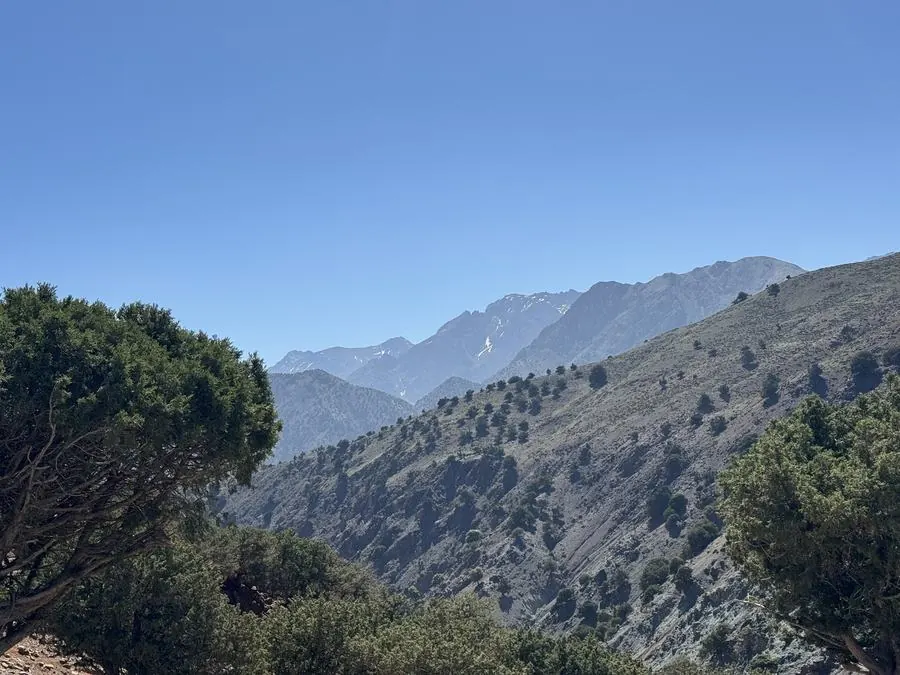
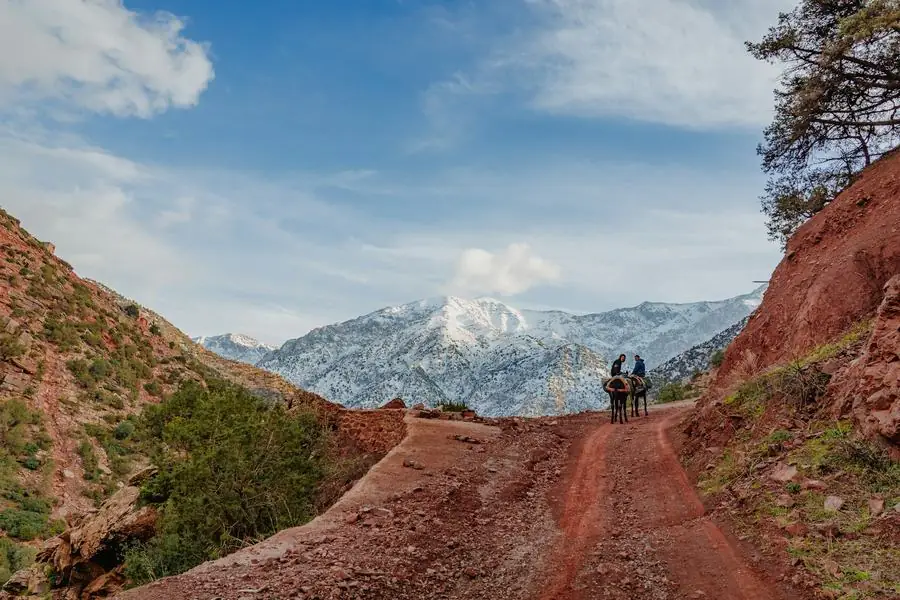
Ouirgane sits where the Nfis river cuts through the foothills of the High Atlas. Because it is lower than Imlil, it stays mild in winter, when Imlil can be under snow, and the walking is gentler. The landscape is also different: red clay hills, pine and juniper forest, olive and almond trees, and adobe villages that seem to grow out of the earth. In spring the almond blossom and green barley fields against the red soil are beautiful.
It is also a good place to understand rural life in the Atlas. Families here still farm small terraces, keep a few goats and grow most of their own food. Walking with a local guide, you will be invited for tea more often than you can accept.
The best hikes around Ouirgane
The Ouirgane valley loop
A circular walk of 3 to 4 hours through villages, orchards and pine forest above the river. It is the best introduction to the area and works in every season. This is the route of our Ouirgane valley day hike.
Ouirgane to Imlil
The old mule paths between Ouirgane and Imlil make a lovely two- or three-day trek through remote villages, with the scenery getting higher and wilder each day. Our Ouirgane to Imlil 3-day trek sleeps in village guesthouses along the way.
Moulay Brahim gorge
On the way back to Marrakech, the gorge at Moulay Brahim is a dramatic short walk between steep red cliffs. See our Moulay Brahim gorge hike.
History and heritage
Ouirgane lies on the old route over the Tizi n'Test pass, once one of the main ways between Marrakech and the Souss. A little further up the road is Tinmel, where a 12th-century mosque marks the birthplace of the Almohad movement that went on to rule much of North Africa and Spain. The valley also has a long Jewish history, and the shrine of Rabbi Haim ben Diwan near Ouirgane is still visited by pilgrims.
The region was badly hit by the earthquake of September 2023. Rebuilding has been slow but steady, and visiting with local guides and staying in local guesthouses is one of the most direct ways to support the families here. Read about responsible trekking in Morocco.
When to go
- Winter (December to February): one of the best places in the Atlas for winter walking, with mild sunny days. Nights are cold.
- Spring (March to May): almond blossom, wildflowers and green fields. Our favourite time.
- Summer (June to August): hot in the middle of the day. Walk early and rest in the afternoon.
- Autumn (September to November): golden light, harvests and comfortable temperatures.
Where to stay
Ouirgane has a handful of guesthouses and small hotels, most of them set in gardens by the river. On our trips we stay at Chez Momo, a family-run inn with a garden and very good home cooking. If you prefer to base yourself higher up, Imlil is only about 40 minutes away; read our guide to Riad Atlas Imlil.
Getting there
Ouirgane is about an hour's drive from Marrakech via Asni. Grand taxis run from Marrakech to Asni, where you can find another taxi on to Ouirgane, but most visitors find a private transfer far easier. All our Ouirgane trips include pick-up from your hotel or riad in Marrakech.
Frequently asked questions
How far is Ouirgane from Marrakech?
About 60 km, or roughly one hour by car via Asni.
Is Ouirgane worth visiting?
Yes, especially if you want quiet villages, easy hikes and mild weather. It is lower and warmer than Imlil, which makes it ideal in winter.
Can you hike in Ouirgane in winter?
Yes. Ouirgane is one of the best places for winter walking in the Atlas because it is lower than Imlil and usually free of snow.
Can I combine Ouirgane and Imlil?
Yes. They are about 40 minutes apart by road, and old mule paths link them on foot over two or three days.